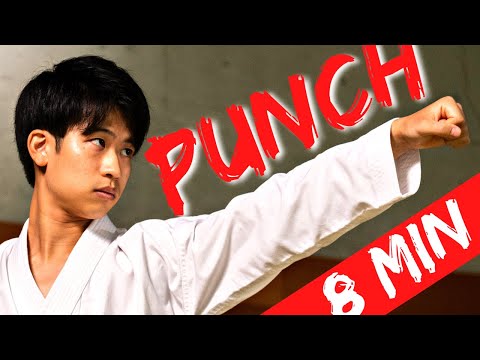
Mastering the Karate Punch: Expert Tips for Improving Your Technique
When it comes to karate, the punch is one of the most fundamental and powerful techniques. Mastering the karate punch requires practice, precision, and proper technique. Here are some expert tips to help you improve your punching skills:
1. Stance and Balance
In karate, having a solid stance and maintaining balance is crucial for generating power in your punches. Stand with your feet shoulder-width apart, keeping your knees slightly bent. Distribute your weight evenly between both legs to ensure stability.
2. Proper Fist Formation
To execute a powerful punch, you must form your fist correctly. Curl your fingers tightly into your palm, with your thumb resting on top of your index and middle fingers. This formation provides stability and protects your hand from injury.
3. Hip Rotation
The power behind a karate punch comes from the rotation of your hips. As you deliver the punch, engage your core muscles and rotate your hips forward, transferring the power from your lower body to your upper body.
4. Focus on Speed and Accuracy
In karate, speed and accuracy are key. Practice punching drills that focus on hitting targets with precision and speed. Start with slower punches to ensure proper technique, then gradually increase your speed while maintaining accuracy.
Discover the Powerful Techniques Karate Teaches for Self-Defense
Karate is not only an effective martial art, but it also teaches valuable self-defense techniques. Learning karate can empower you with the skills and confidence to protect yourself in dangerous situations. Here are some powerful self-defense techniques taught in karate:
1. Front Punch
The front punch is a straight punch executed with the lead hand. It is a quick and powerful strike that targets the opponent’s face or torso. Practice this technique to develop speed and accuracy in your punches.
2. Hook Punch
The hook punch is a curved punch that targets the opponent’s chin or jaw. It is a powerful punch that generates rotational force. Mastering the hook punch can give you an advantage in close-range combat situations.
3. Uppercut
The uppercut is an upward punch that targets the opponent’s chin or body. It is a devastating punch that can knock an opponent off balance. Practice proper body mechanics to deliver a strong and accurate uppercut.
4. Palm-heel Strike
The palm-heel strike is a strike using the palm of your hand. It is a versatile technique that can be used to target various areas of the body, such as the nose, chin, or solar plexus. Perfecting this strike can give you an effective self-defense tool.
Karate Terminology: What to Say When Executing a Punch
Learning the proper terminology is an essential aspect of karate training. Here are some common terms used when executing a punch:
1. Tsuki
Tsuki refers to a punch in karate. It is used when executing various types of punches, such as the front punch, hook punch, or uppercut.
2. Kiai
Kiai is the vocalization or shout performed during a punch. It helps to focus your energy, intimidate opponents, and enhance the power of your strike.
3. Zanshin
Zanshin means “remaining mind” and refers to the state of heightened awareness and preparedness after executing a punch. It involves maintaining focus and readiness for any potential counterattacks.
Master the art of basic Karate punching: A comprehensive guide
Mastering the art of basic karate punching requires dedication and consistent practice. Here is a comprehensive guide to help you in your journey:
1. Warm-up and Stretching
Before starting your punching practice, warm up your body with light cardiovascular exercises and perform stretching exercises to prevent injuries and increase flexibility.
2. Shadow Boxing
Shadow boxing is a fundamental exercise in karate to practice your punches without a partner or target. Focus on technique, speed, and accuracy as you visualize an opponent in front of you.
3. Focus Mitts/Heavy Bag Training
Utilize focus mitts or a heavy bag to practice your punches with resistance. This training allows you to develop power, speed, and precision by hitting a target.
4. Partner Drills
Working with a training partner is essential to simulate real combat scenarios. Practice punching drills with a partner, focusing on timing, distance, and defensive techniques.
By following these tips and consistently practicing karate punching techniques, you can improve your skills and become a more effective martial artist. Remember to always prioritize safety and proper technique during training.